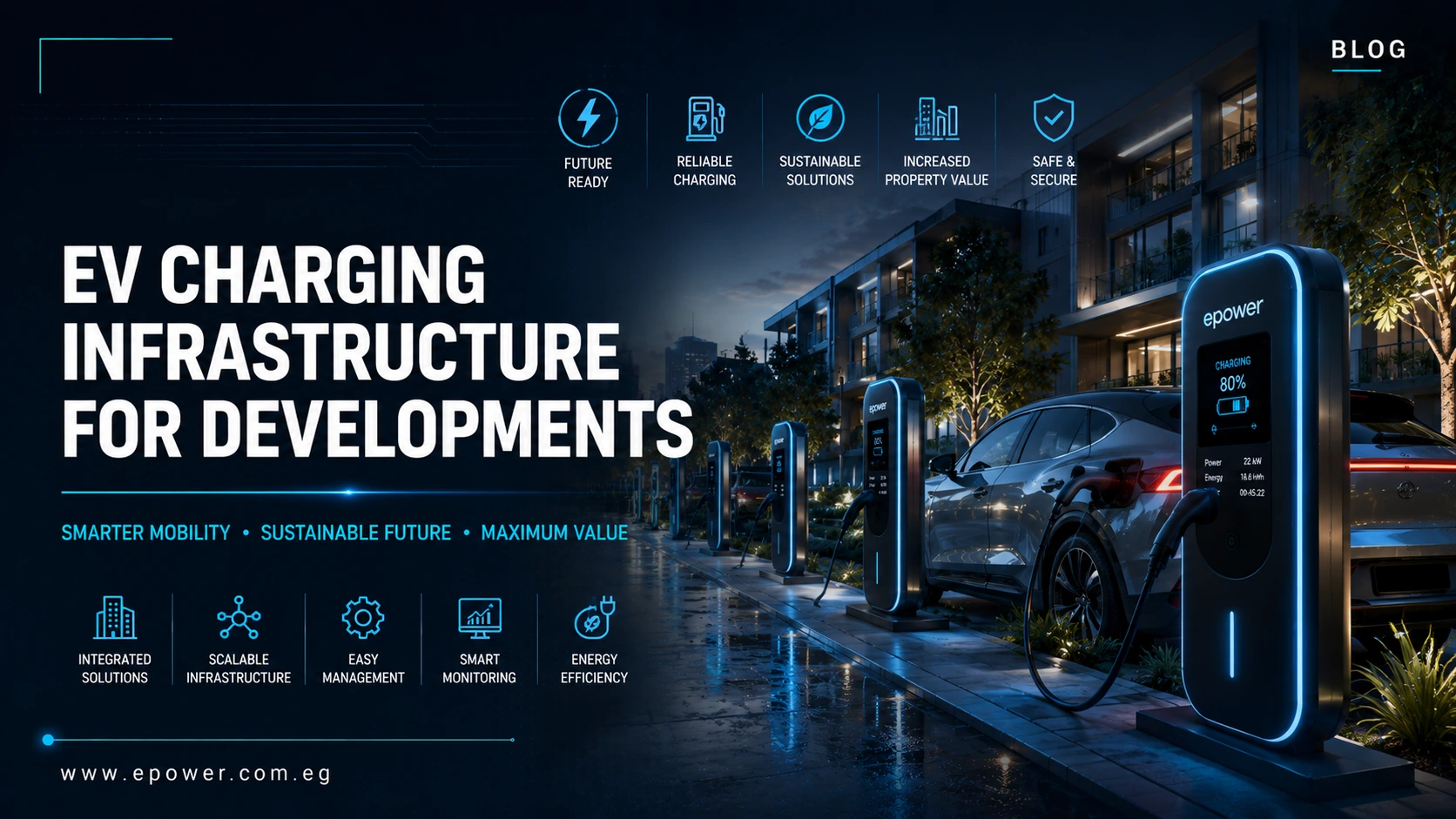
The global shift toward electric mobility is transforming how developers plan residential communities, commercial properties, mixed-use developments, industrial parks, and smart cities. As electric vehicle adoption continues to grow, charging infrastructure is no longer considered a luxury—it has become an essential part of modern development planning.
Implementing EV Charging Infrastructure for Developments allows property owners and developers to create future-ready projects that support sustainable transportation while enhancing convenience for residents, employees, tenants, and visitors. A well-designed charging network also improves asset value, strengthens environmental credentials, and supports long-term operational efficiency.
Whether developing a residential compound, office complex, shopping mall, hotel, hospital, or business district, integrating EV charging infrastructure from the early design stage reduces future upgrade costs and ensures the project is prepared for increasing EV adoption. Planning guidance from transportation authorities consistently recommends incorporating charging infrastructure into development strategies early, alongside electrical capacity and site planning.
What is EV Charging Infrastructure for Developments?
Definition
EV Charging Infrastructure for Developments refers to the complete electrical infrastructure required to support electric vehicle charging within residential, commercial, industrial, and mixed-use projects.
The infrastructure includes charging stations, electrical distribution systems, transformers, switchgear, energy management software, monitoring platforms, communication networks, and supporting civil works.
Rather than installing standalone chargers, developers create a scalable charging ecosystem capable of supporting current demand while allowing future expansion.
How It Works
Electricity is supplied through the project's electrical distribution network before being delivered to EV charging stations installed throughout parking areas.
Smart charging systems communicate with central management software to monitor charger availability, energy consumption, user authentication, billing, and equipment performance.
Load management technologies automatically balance electricity demand across multiple chargers, preventing unnecessary strain on the building's electrical infrastructure.
Core Components of EV Charging Infrastructure
Electrical Power Distribution
Reliable electrical distribution forms the foundation of every EV charging project.
This includes:
- Medium-voltage supply
- Low-voltage distribution
- Transformers
- Switchgear
- Protection systems
- Distribution panels
Proper electrical design ensures sufficient capacity for both current charging demand and future expansion.
EV Charging Stations
Charging stations are selected based on the project's operational requirements.
AC Chargers
AC chargers are ideal for residential compounds, office buildings, hotels, and locations where vehicles remain parked for extended periods.
DC Fast Chargers
DC fast chargers provide rapid charging for commercial developments, public facilities, transportation hubs, and high-traffic locations where shorter charging times are essential.
Smart Energy Management
Modern charging infrastructure includes intelligent energy management systems capable of:
- Dynamic load balancing
- Real-time monitoring
- Remote diagnostics
- Energy optimization
- Usage analytics
- Automated reporting
These technologies improve operational efficiency while reducing electricity costs.
Charging Management Software
Centralized software enables facility managers to control the entire charging network.
Typical features include:
- User authentication
- Mobile application integration
- Payment management
- Charger availability monitoring
- Performance reporting
- Maintenance scheduling
Benefits of EV Charging Infrastructure for Developments
Future-Proof Developments
Installing EV charging infrastructure during construction prepares developments for increasing electric vehicle adoption and avoids expensive retrofits later.
Increased Property Value
Projects equipped with EV charging facilities become more attractive to buyers, tenants, investors, and corporate occupants seeking sustainable buildings.
Enhanced Sustainability
Supporting electric mobility helps reduce transportation-related emissions while contributing to green building initiatives and ESG objectives.
Better User Experience
Residents, employees, customers, and visitors benefit from convenient on-site charging, improving satisfaction and overall property appeal.
Lower Operating Costs
Smart load management optimizes electricity consumption and helps reduce peak demand charges while maximizing existing electrical infrastructure.
Scalable Infrastructure
Modern charging systems can expand as EV adoption increases, allowing developers to add chargers without redesigning the entire electrical network.
Applications Across Different Developments
Residential Communities
Apartment buildings and gated compounds increasingly require EV charging stations to support homeowners and tenants.
Commercial Buildings
Office developments provide workplace charging that supports employees, corporate fleets, and visitors.
Retail Centers
Shopping malls and retail destinations enhance customer convenience by offering charging during shopping visits.
Hotels and Hospitality
Hotels provide added value by allowing guests to charge vehicles throughout their stay.
Healthcare Facilities
Hospitals and medical centers support patients, visitors, and healthcare professionals with reliable charging facilities.
Industrial and Logistics Parks
Industrial developments benefit from charging infrastructure for employee vehicles, corporate fleets, and future electrified transportation systems.
Key Design Considerations
Electrical Capacity Planning
Accurate load forecasting ensures the electrical infrastructure can safely support current and future charging demand.
Charger Placement
Charging stations should be strategically located to maximize accessibility while minimizing installation costs and traffic congestion.
Smart Load Management
Dynamic load balancing distributes available electrical capacity across multiple chargers, preventing overloads and reducing infrastructure costs.
Network Scalability
Infrastructure should allow additional charging stations to be installed as electric vehicle adoption increases.
Integration with Renewable Energy
Many developments integrate EV charging with solar power systems and battery energy storage to improve sustainability and reduce operating expenses.
Why EV Charging Infrastructure Matters for Future Developments
Governments, developers, and utility providers worldwide are investing heavily in EV charging networks as transportation becomes increasingly electrified. Industry guidance emphasizes coordinated planning between electrical infrastructure, urban design, and future charging demand to ensure reliable, scalable deployment.
Developments that incorporate charging infrastructure today are better positioned to attract environmentally conscious residents, international businesses, and long-term investors while remaining competitive in an evolving real estate market.
Why Choose epower?
epower delivers complete EV Charging Infrastructure for Developments solutions, supporting every stage of the project lifecycle—from feasibility studies and electrical design to engineering, procurement, installation, commissioning, operation, and long-term maintenance.
With extensive expertise in electrical infrastructure, power distribution, smart energy management, and integrated facility solutions, epower develops scalable EV charging networks tailored to residential communities, commercial developments, industrial facilities, hospitality projects, healthcare institutions, and smart cities. By combining advanced charging technologies with intelligent energy management systems, epower helps developers reduce operational costs, optimize electrical performance, and build future-ready projects that support sustainable mobility.
Conclusion
As electric vehicles become increasingly common, EV Charging Infrastructure for Developments is rapidly becoming a standard requirement for modern construction projects. Integrating charging solutions from the beginning allows developers to reduce future upgrade costs, improve property value, support sustainability objectives, and deliver a better experience for occupants.
With the right engineering expertise and scalable infrastructure, developers can create intelligent, energy-efficient environments that meet the evolving demands of electric mobility while protecting long-term investments.
Frequently Asked Questions
What is EV Charging Infrastructure for Developments?
It refers to the electrical systems, charging stations, software, and supporting infrastructure required to provide reliable electric vehicle charging within residential, commercial, industrial, and mixed-use developments.
What types of EV chargers are used in developments?
Most projects use AC chargers for long-duration parking and DC fast chargers for locations requiring rapid charging.
Why should developers install EV charging infrastructure?
Installing charging infrastructure increases property value, supports sustainability goals, improves user convenience, and prepares developments for future transportation trends.
Can EV charging infrastructure be expanded later?
Yes. Properly designed systems are scalable, allowing additional charging stations to be installed as demand grows.
What technologies improve EV charging efficiency?
Smart load management, energy monitoring, charging management software, IoT connectivity, and predictive maintenance all improve charging network performance.
Why choose epower for EV Charging Infrastructure for Developments?
epower provides end-to-end EV charging solutions, combining electrical engineering expertise, smart energy management, scalable infrastructure design, installation, commissioning, and long-term maintenance to help developers build reliable and future-ready charging networks.