
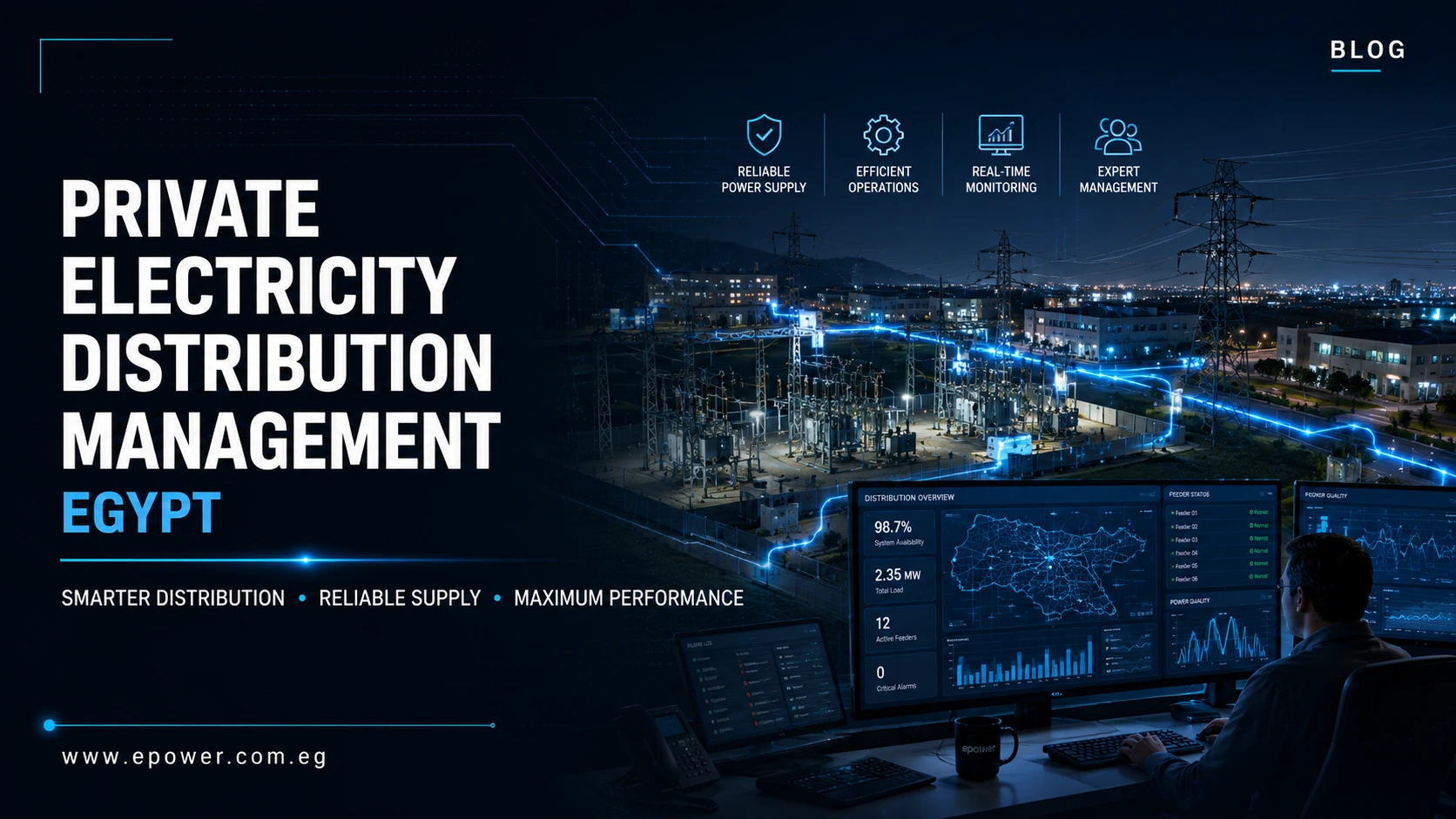
With the rapid expansion of smart cities, industrial zones, gated communities, commercial complexes, and large-scale infrastructure projects, the demand for Private Electricity Distribution Management Egypt has increased significantly. Organizations are no longer focused solely on receiving electricity; they also require efficient systems to distribute, monitor, maintain, and optimize power within their own facilities.
A well-managed private electricity distribution network ensures uninterrupted power supply, improves operational efficiency, minimizes technical losses, and enhances the overall reliability of electrical infrastructure. Whether it is a residential compound, manufacturing plant, hospital, university, or business park, professional distribution management has become a critical component of modern energy systems.
By integrating advanced technologies such as smart metering, SCADA systems, remote monitoring, and predictive maintenance, private distribution networks provide greater visibility and control over electricity consumption while supporting long-term operational sustainability.
What is Private Electricity Distribution Management?
Definition
Private Electricity Distribution Management Egypt refers to the planning, operation, maintenance, monitoring, and optimization of privately owned electrical distribution networks that deliver electricity from the utility connection point to end users within a specific development or facility.
Unlike public electricity distribution, these networks are managed by the project owner or an authorized service provider responsible for maintaining reliable power delivery while complying with local regulations and safety standards.
How It Works
Private electricity distribution begins with receiving power from the public utility through an approved connection point. Electricity is then distributed across the facility using transformers, switchgear, distribution panels, protection devices, and electrical cables.
Modern systems continuously monitor network performance through digital platforms, allowing operators to detect faults, balance electrical loads, monitor energy consumption, and perform preventive maintenance before problems occur.
Key Components of a Private Electricity Distribution Network
Medium Voltage Distribution Systems
Medium-voltage systems receive electrical power from the utility and distribute it to transformers located throughout the project. Proper design of these systems ensures reliable power delivery while supporting future expansion.
Low Voltage Distribution Systems
Low-voltage networks distribute electricity from transformers to buildings, equipment, lighting systems, and end users. Efficient network design minimizes voltage drops and improves overall system performance.
Distribution Transformers
Transformers reduce medium-voltage electricity to usable low-voltage levels while maintaining system stability and efficiency.
Switchgear and Protection Systems
Switchgear protects electrical equipment against overloads, short circuits, and other electrical faults. Protection relays automatically isolate faulty sections of the network to maintain service continuity.
Smart Metering Solutions
Smart electricity meters provide accurate consumption data, remote monitoring, automated billing, and real-time energy analytics that improve operational transparency.
Core Services of Private Electricity Distribution Management Egypt
Electrical Network Design
Professional engineering begins with comprehensive electrical studies, including load calculations, cable sizing, protection coordination, voltage drop analysis, and equipment selection.
Proper engineering ensures the network operates safely while meeting current and future energy demands.
Network Operation
Daily network operation includes monitoring electrical loads, managing switching operations, supervising system performance, and responding quickly to electrical faults.
Continuous monitoring allows operators to maintain stable power distribution while reducing the likelihood of unexpected outages.
Preventive Maintenance
Routine maintenance plays an important role in extending equipment life and improving system reliability.
Maintenance activities typically include:
Transformer Inspection
Regular inspections identify overheating, insulation deterioration, and mechanical issues before failures occur.
Switchgear Testing
Testing ensures protection systems operate correctly during electrical faults.
Cable Inspection
Thermal imaging and insulation testing help detect damaged cables before service interruptions occur.
Earthing System Verification
Proper grounding protects equipment and personnel from electrical hazards while maintaining system safety.
Smart Monitoring and Automation
Digital monitoring platforms allow operators to access real-time information regarding:
- Energy consumption
- Network status
- Voltage quality
- Equipment health
- Fault alarms
- Load profiles
Automation enables faster fault detection and significantly reduces response times.
Benefits of Private Electricity Distribution Management Egypt
Improved Reliability
Professional network management reduces service interruptions and ensures a stable electricity supply across the entire facility.
Better Energy Efficiency
Continuous monitoring helps identify unnecessary energy consumption and supports better load balancing, resulting in lower operating costs.
Reduced Operational Costs
Preventive maintenance and digital monitoring reduce emergency repairs, equipment failures, and costly downtime.
Enhanced Safety
Regular inspections, protection testing, and compliance with electrical standards create a safer working environment while reducing operational risks.
Greater Visibility
Advanced monitoring systems provide facility managers with complete visibility into energy consumption, equipment performance, and network health.
Scalability
Private electrical distribution networks can easily accommodate future facility expansions without requiring major infrastructure modifications.
Industries That Benefit from Private Electricity Distribution Management Egypt
Residential Communities
Modern residential compounds require reliable electricity distribution, smart metering, and centralized energy management to provide residents with uninterrupted service.
Commercial Developments
Shopping malls, office buildings, and mixed-use developments depend on efficient electrical distribution systems to support lighting, HVAC systems, elevators, and tenant operations.
Industrial Facilities
Manufacturing plants require highly reliable power distribution to maintain continuous production, protect sensitive equipment, and minimize downtime.
Healthcare Facilities
Hospitals and medical centers rely on professionally managed electrical systems to support life-saving equipment and critical infrastructure.
Educational Institutions
Universities and schools benefit from centralized monitoring and efficient energy management across multiple buildings.
Hospitality Projects
Hotels and resorts require uninterrupted electricity to maintain guest comfort while controlling operational costs through intelligent energy management.
Technologies Used in Modern Distribution Management
SCADA Systems
SCADA platforms provide centralized monitoring and control of electrical networks, enabling operators to supervise system performance in real time.
Smart Prepaid Metering
Smart prepaid meters improve billing accuracy while allowing users to monitor electricity consumption and recharge remotely.
Remote Monitoring
Cloud-based monitoring systems enable engineers to supervise electrical assets from virtually any location.
Energy Analytics
Advanced analytics identify consumption trends, peak demand periods, and opportunities for improving energy efficiency.
Predictive Maintenance
Artificial intelligence and sensor technologies analyze equipment condition and predict failures before they occur, reducing maintenance costs and improving system reliability.
Why Choose epower?
epower provides comprehensive Private Electricity Distribution Management Egypt solutions that cover every stage of the electrical distribution lifecycle. From engineering design and network installation to operation, maintenance, smart metering integration, and digital energy management, the company delivers reliable solutions tailored to residential, commercial, industrial, and infrastructure projects.
With an experienced engineering team, advanced monitoring technologies, and a strong commitment to quality and safety, epower helps clients improve network reliability, reduce operational costs, optimize energy performance, and maximize the lifespan of electrical assets. Every solution is designed to meet project requirements while supporting long-term operational efficiency and sustainable growth.
Conclusion
As Egypt continues investing in modern infrastructure and smart developments, Private Electricity Distribution Management Egypt has become a key factor in delivering reliable, efficient, and sustainable electrical services. Organizations that implement professional distribution management benefit from improved operational performance, enhanced safety, lower maintenance costs, and better energy utilization.
By combining advanced technologies with experienced engineering expertise, private electricity distribution management creates a future-ready electrical network capable of supporting growing energy demands while maintaining high levels of reliability and efficiency.
Frequently Asked Questions
What is Private Electricity Distribution Management Egypt?
It is the professional operation, maintenance, monitoring, and optimization of privately owned electrical distribution networks serving residential, commercial, industrial, and infrastructure projects.
Who needs private electricity distribution management?
Residential compounds, industrial facilities, commercial buildings, hospitals, universities, hotels, airports, and business parks all benefit from professionally managed electrical distribution systems.
What technologies are commonly used?
Modern systems typically include SCADA platforms, smart prepaid metering, remote monitoring, predictive maintenance, and energy analytics.
What are the main benefits?
The primary benefits include improved reliability, reduced downtime, lower operating costs, enhanced safety, better energy efficiency, and greater visibility into network performance.
Why is preventive maintenance important?
Preventive maintenance helps identify potential equipment issues before failures occur, extending asset life and reducing unexpected outages.
Why choose epower?
epower delivers complete Private Electricity Distribution Management Egypt solutions, including engineering, installation, operation, maintenance, smart metering, and digital energy management, helping clients achieve reliable and efficient electrical distribution systems across a wide range of industries.